The East Field
The fire was down to its gossiping embers in the The Toad and Lantern and its patrons were blurring a little at the edges, the conversation dizzy.
Lowen had sat an hour in the kind of silence that happens only in noise—content, thoughtless, letting the tide of talk rise and fold around them. They were half on their way home, really—just a stop to warm the legs before heading back to check the herbs, maybe pick up some smithing supplies.
One voice rose above the hubbub, tipped with mischief. It was Bodric. “Ere, you know our Larry started off working down Old Oliedna’s farm few weeks back?”
A few heads tipped his way, not fully turned, but listening.
“So he was down there setting to mulch the east field, and, well—” he hitched up his shoulder, leaned forward, “you’ll never guess what Oliedna’s got growing.“
He paused to lift his tankard—tilted it slowly, but stopped halfway to his mouth.
“Gnomes.“
He pronounced it roundly, G and all.
The air hiccupped. A few brows raised. A few grins tugged.
“Under her elders. Bold as brass. Larry near as jumps clean out his trousers.”
“He calls up to old Oli, ‘These yours?’”
“Over she comes and has ‘erself a squint, then yells—” his voice pitched up, shrill as Oliedna herself, “‘Well these ain’t what I ordered! They was meant to be garlics!’”
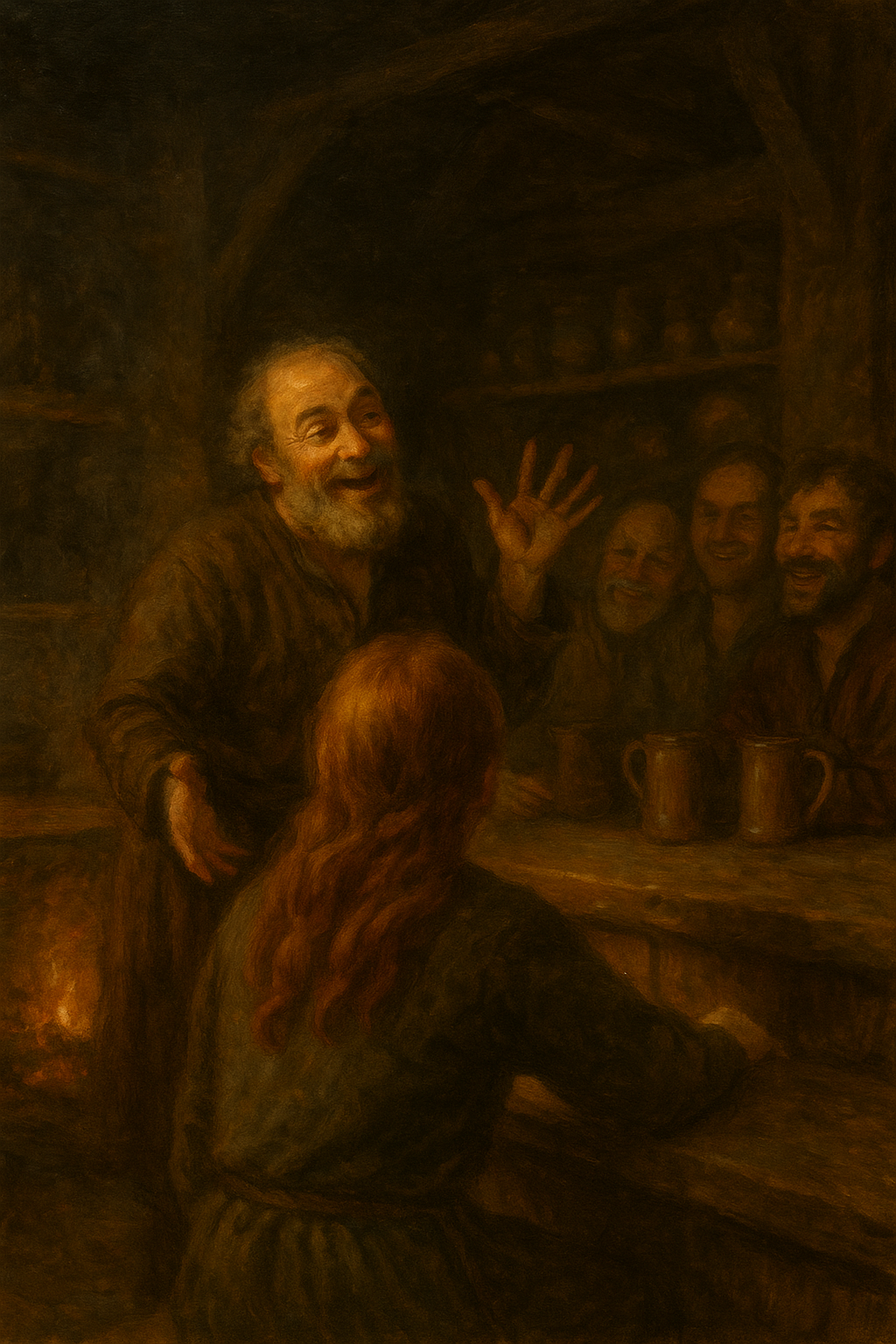
Someone barked a laugh. A rumble went round the room—half surprise, half that good-natured outrage that happens when reality isn’t behaving right.
“Well anyway,” he sniffed. “Her chimney is spotless now. And it saves ‘er the bad breath.”
Laughter went up. Someone started half-singing, ‘There’s none like a gnome down under...’ and the conversations unspooled again.
Then, quieter, he leaned towards Lowen across the scratched bar top.
“But I’ll tell you this—whatever’s growing in the next field over… that weren’t on the seed list neither.”
The Next Field Over
It was a hot day. One of those sharp-edged, high-pitched days where the air hums, whether anything’s in it or not. No breeze, no shade worth speaking of. Just the steady weight of sun and the sound of things growing—or trying to.
From the gate it looked fine. A sprawl of late-sown flowers—corncockle, phacelia, poppies curling at the edges. Lowen leaned on the post, squinting. Didn’t he say these weren’t in the seed list?
They stepped in. The flowers let them pass without fuss, soft stems brushing at knees, whispering the way they do when you wade through them with half a mind on something else.
They crouched, to touch the stems and search for oddity—and that’s when they saw it.
Beneath the scatter of blooms, a grid of wordless whispers—stubble and stalk-ends standing in rows, short and broken, unnervingly regular. A pause in time, mid-breath.
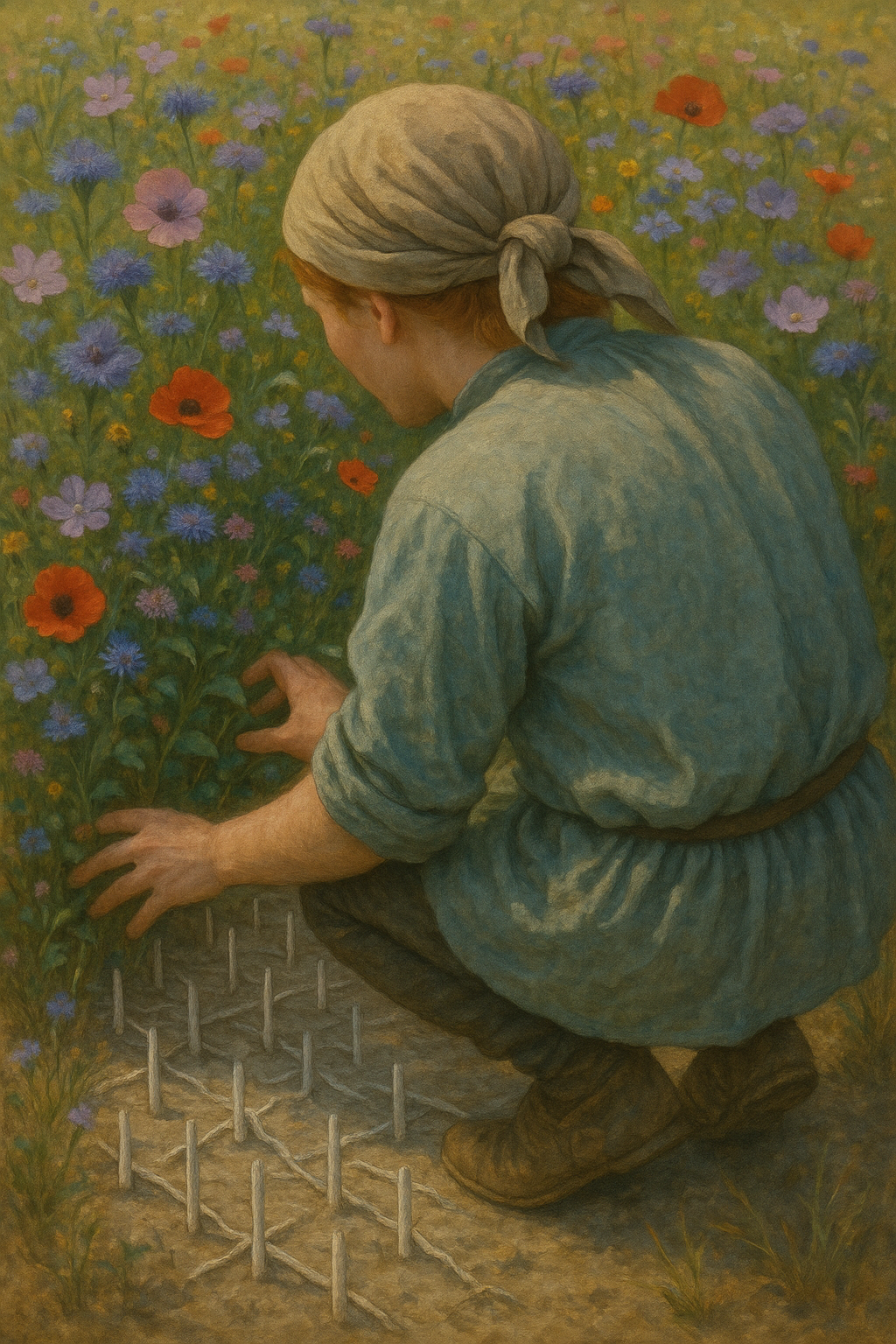
The stalks had burned, but not the way fire usually takes things. Not black and crumbling—these were white, pale as bone, the kind of white you get when wood chars and the ash holds the shape. Cracks spidered along the fibres.
Lowen reached out. Pinched one stem at the base. It came loose with hardly any persuasion—the soil giving it up as if it was glad to be rid. The roots were the same—burnt right into the earth, hair-fine tendrils crisped and curled, as if the fire had come up from underneath, from the inside out. Something small shifted in the roots.
A pebble? No. Lighter. Cooler. Bean-sized, but not a bean. Dull as pewter, neither metal nor stone. No sheen. Just there. As though it belonged.
“S’pose you’d know if it was yours,” came a voice from behind them.
Lowen startled, fist closing around the object, and turned. The farmer was already standing a little way off—hands sunk in his pockets, shoulders set, eyes on the field, not on them. He hadn’t made a sound coming up. Some people don’t.
“I—” started Lowen, with nothing to follow it. There were questions, of course. What had been planted. When it burned. Whether anyone saw it go. But none of them made it out of Lowen’s mouth.
He made a noise between a hum and a mumble, then said with surprising clarity, “Things swap places, now and then.”
A silence sat between them, neither heavy nor comfortable. The farmer’s gaze slipped ever further away.
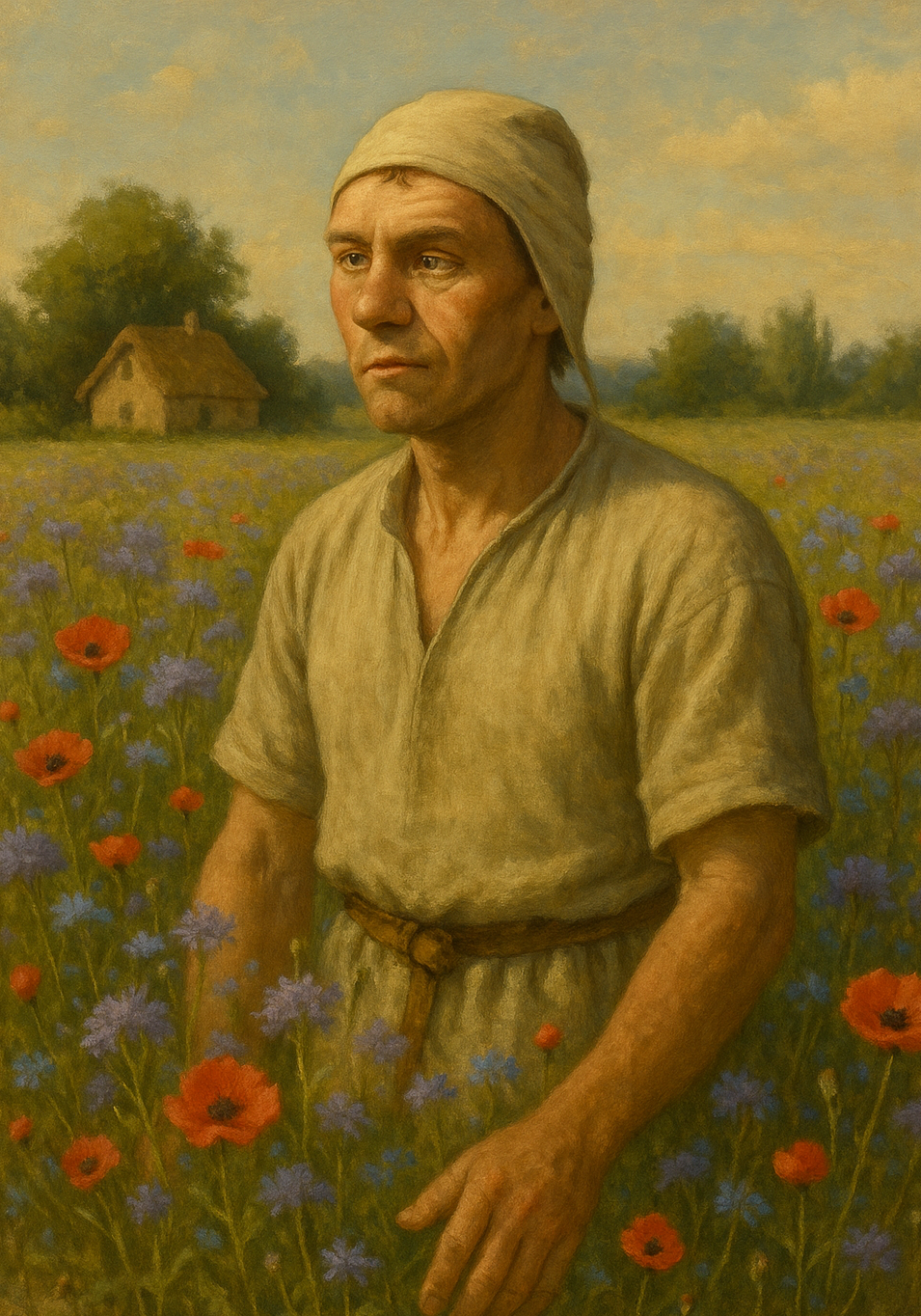
“Still.” He batted a fly from his chin. “Something grew again.” He frowned then, appearing to spot something in the middle distance.
Lowen brushed a hand down their trousers, whether for dust or something else. Their head tipped quizzically of its own accord, and they felt their feet turn back towards the gate. “Bye then,” they said.
As Low strode through the flowers, the farmer made a short, sharp call—half word, half whistle, carried on the air just long enough for Lowen to realise they hadn’t quite caught it. It might’ve been Wixie, or something shaped like it—but it was gone before their mind could close around it. When they glanced back, he was already huffling towards the copse at the north edge of the field, head turned away.