Human – Farmer – Listener to the land
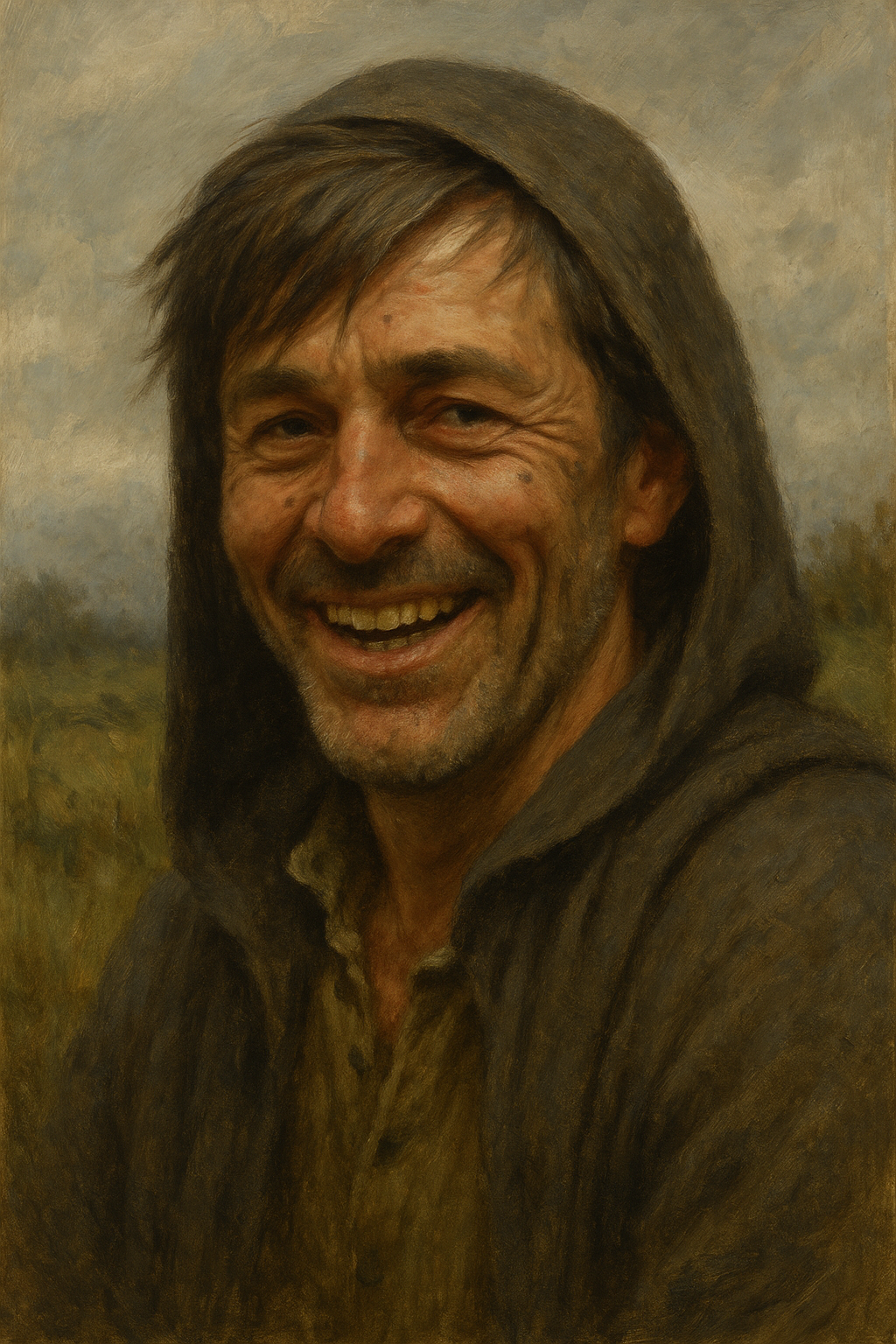
Origins
Fennick Foss lived at the edge of Bardney Fen, on a stretch of land most folks passed over. The place was called Bardney Edge, though no one quite knew where the edge was or what it led to. The ground was too wet for most, too stubborn to tame.
Fennick grew up in a big family, and when Farmer Foss and Mrs Farmer passed on, the land was divided. Fennick laughingly accepted the worst plot — and quietly made it work.
He was not magical, not as others saw it. But the soil responded to him, and the wind curled differently round his fields.
His Siblings
- Bren Foss – eldest brother, all shoulders and opinions. Married into land further north, full of stories and cider.
- Gilly Foss – sister, sharp as a blade and good with money. Runs a tavern at a rivercrossing. Protective and a little bossy.
- Piney Foss – younger brother, gregarious, always moving. Ended up a fence-builder and trader.
- Clem Foss – the youngest, quiet and clever. Keeps bees and a garden near the forest fringe. Still sends honey.
- Fennick Foss – the one who got the soggy patch and made it sing.
Farmer Foss wasn’t unkind, just practical to a fault. Mrs Farmer balanced him with dry affection and a heavy hand in the kitchen.
Fennick’s Skill
Fennick being a good farmer on the fen’s edge is remarkable, but in a quiet way. He understands the land as it is, doesn’t force it, and listens to what it can offer. With precision and patience shaped by earth, he turned his farm into a thriving patchwork of roots, flax, ducks, and geese.
It was flax that paid for what the ducks and roots didn’t cover — firewood, salt, cloth he didn’t make himself. He grew it in thin strips along the drier ground, then retted it in sunken pits he kept covered with planks and river stones. He’d stir the water with a stick, sniff it, mutter something about sour cider, and keep going. It was slow work. But everything was, out there.
Fennick’s way with the land is what first drew Stellan to his farm. The soil and the wind were in harmony — not forced or broken, but answered. As if someone were already halfway towards understanding.
Geese, Ducks, and That One Love Before
This is the heart-crack he never talks about but never really heals from.
“Dilly was like midsummer hay: sweet, soft, and warm”
She tried the fen for a year or so, but it dulled her. Fennick didn’t blame her. He just kept on. There were always fences to fix, birds to feed, and flax to pull from the retting pool.
Sometimes he sat by the fire with his goose on his lap, aggressive to everyone else), stroking its feathers, sipping cider, letting the silence fill up the room.
(Goose is called Marleen. Bites visitors. Won’t let Clem Foss near the shed. Once chased a visiting priest into a ditch. Fennick just said, “Well. She’s got good instincts.”)
He wasn’t actively waiting. But he was alone. Until Stellan, wild and unsought, blew into his field and stopped.
His Voice
Fennick speaks plain, with a thick fen-edge accent — the kind that rounds its vowels, swallows consonants, and puts humour into pauses. He doesn’t say more than needed, but when he speaks, it’s full of texture.
He’s got a dry, surprising wit, more in how he says something than what he says. His jokes often sound serious until the last word. He calls people “me duck” without thinking, and rarely raises his voice, even when swearing (which he does only in full phrases, like “by the wet-end of a goose”).
He says things like:
- “That field’s sulkin’ again.”
- “You don’t dig at peat. You court it.”
- “Rain’s comin’. Smells like it’s in a mood.”
- “Mrs Farmer used to say, land don’t need us—it just puts up with us.”
Family life
There were good years at Bardney Edge. Nothing easy, but good. The flax retted true most seasons, and the ducks kept the beetles down. Stellan stayed — not always, not entirely, but enough to call it home. She would vanish for days, sometimes longer, always returning with wind in her clothes and a look in her eye like she’d seen too much sky. Fennick didn’t press her. He’d say, “Reckon the land’s glad you’re back, me duck,” and pass her a cup of something warm.
When she sat at her loom — often in the evening, with geese pecking gently at the windows — he’d watch from the doorway, arms folded, hair damp from the shed.
“Never seen thread move like that,” he’d mutter. “You’ll be weavin’ ghosts next.”
She never answered, just gave him that side-look of hers, all stillness and storm.
The boys grew up in it — the mud, the root rows, the long silences broken by sudden laughter. Fennick taught them both the land as he knew it: not as master, not even as steward, but as something you live with. He showed them how to test soil warmth with the back of a hand, how to build ditches to guide rain without trapping it, how to harvest flax so it didn’t pull the roots wrong.
Harn was the sharper one, even then. Not unkind, just full of stillness and keen noticing. Fennick caught him once, age ten, just standing — watching the way the wind moved across the sedge. Didn’t disturb him. Just stood nearby and said, “When it bends like that, duck, she’s changin’ direction up high. Not rain. Not yet.” Harn nodded. Said nothing. That was enough.
Tauren, on the other hand, asked everything. Wanted to know why this plant needed sandier soil, why another wouldn’t bloom.
“Land’s got its own wants,” Fennick told him once, shovelling slowly. “Can’t argue with ‘em. But you can nudge.”
Tauren took that to heart, and kept nudging. Always dreaming of what else he could grow, what more the soil might allow.
When Fennick grew older, his joints started grumbling, and the flax took longer to rett. He left the farm to Harn — not because he loved him more, but because Harn listened like he did. Tauren was already halfway gone by then, renting land past the dyke from some Evergild merchant who liked his “passion for herbs.” Harn didn’t protest. He just took the tools, walked the field, and said, “I’ll keep it singing.”
Fennick died with his boots by the door, peat smoke in the chimney, and a linen scrap Stellan had woven tucked beneath his pillow. Marleen the goose chased the healer halfway down the path, but that seemed fitting.
Nothing about him was grand.
But the land still grows straight where he walked.