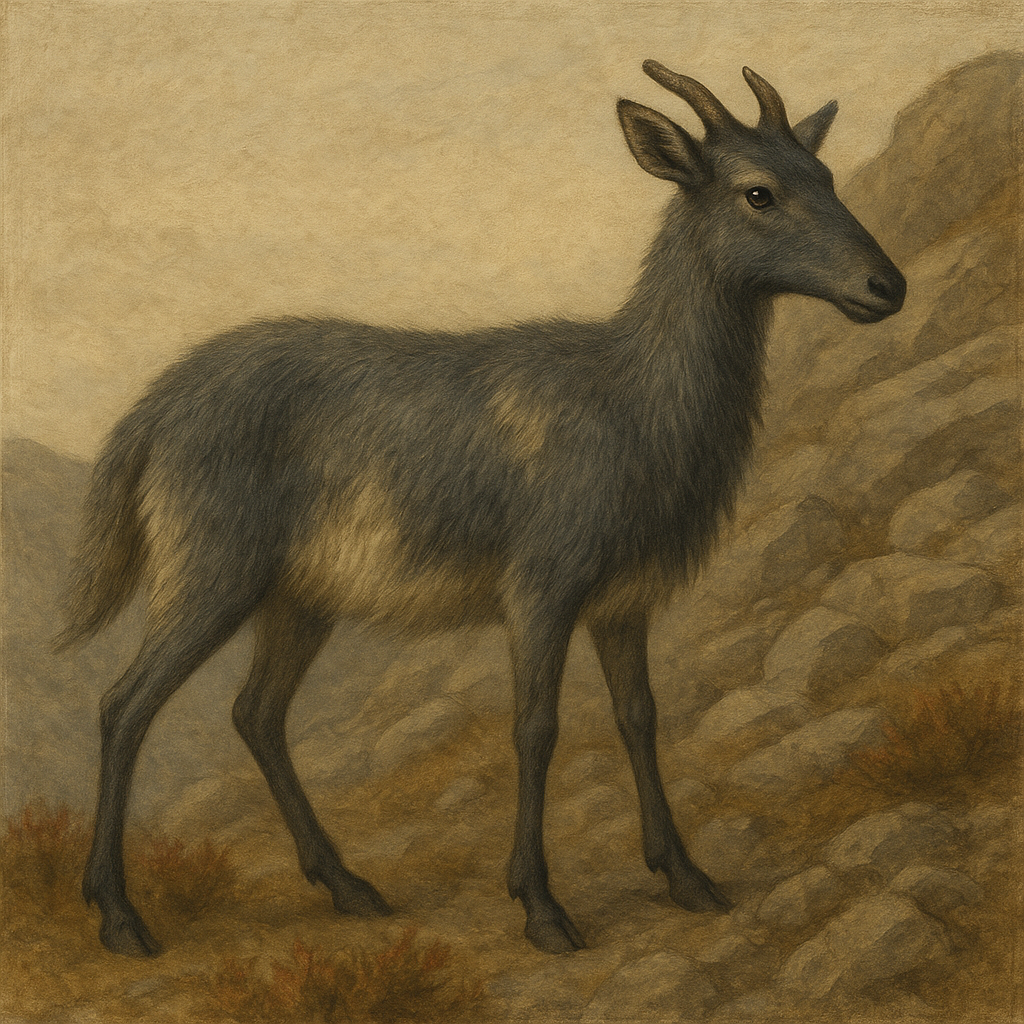
Stocky and sure-footed, the rupa roam the upper flanks of the Camorren Steeps in small, scattered herds. Shaggy guard hairs keep off sleet and rain, while beneath lies a dense, downy coat shed in spring. The High Morna brush them then, corralling the beasts for a day so children can gather the fleece — a rite of passage as much as a harvest.
The rupa are skittish, yet habituated to the Morna. They linger near their halls and ridges, knowing that lynx and wolves give those places a wide berth.
Outsiders prize their wool, softer as thistledown and light to wear, spun into under-garments, boot liners, and vests that fetch a high price even in Evergild halls. The rougher guard hairs are mixed with bast and nettle fibres into weatherproof cloth: heavy, uncanny, said to mark those who wear too much of it. In markets and stories alike, it is only the beasts and the Camorren Steeps that are named — never the hands that spin or weave. The makers are unspoken, their presence obscured, as if the cloth simply comes down from the mountains with the wool itself.